
GLP‑1 Isn’t a Beauty Filter: What You Need To Know Before Chasing “Quick” Weight Loss
GLP-1 drugs treat metabolic conditions, not for quick weight loss. Relying on them can cause muscle loss, bone health issues, and long-term safety risks for short-term aesthetics.
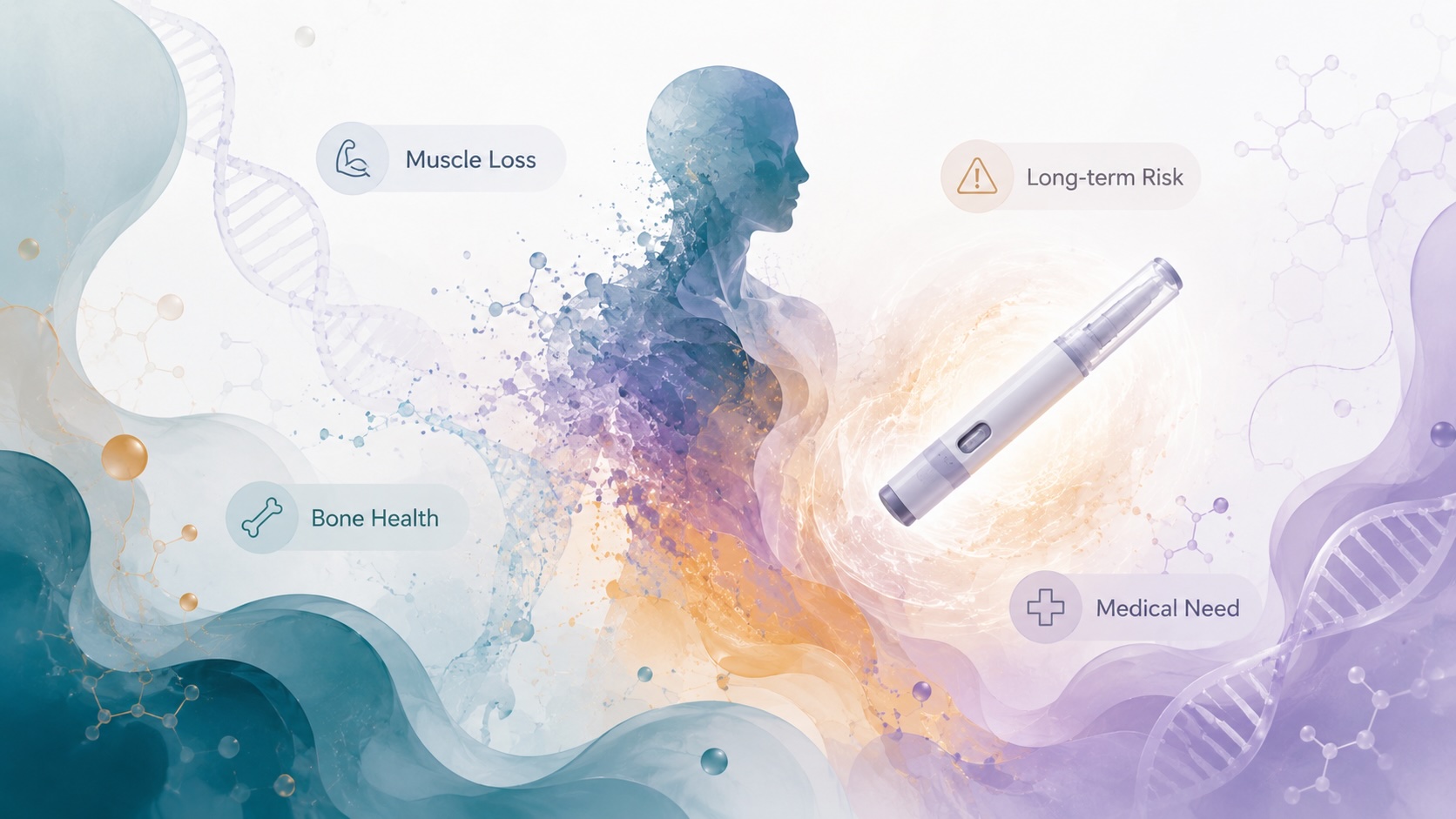
GLP‑1 injections are everywhere right now—from celebrity interviews to “before/after” reels that look more like face filters than real life. Used correctly, these medications can be powerful tools for people living with obesity and type 2 diabetes—but using them like a beauty hack to drop a few kilos for photos is a very different story.
This post is here to help you understand what GLP‑1 drugs actually do, where they help, where they hurt, and how to think clearly before you decide if they fit into your health journey.
It’s not medical advice, but it is a reality check so you can have an informed conversation with your doctor instead of being driven by social media hype.
First, what are GLP‑1 drugs really?
GLP‑1 receptor agonists (like liraglutide, semaglutide and tirzepatide) were originally developed to treat type 2 diabetes and obesity—not as cosmetic slimming injections.
They mimic a natural gut hormone that helps your pancreas release insulin, reduces glucagon, slows how quickly food leaves your stomach, and dials down appetite, which can improve blood sugar and support weight loss.
In clinical trials for obesity, people on GLP‑1 drugs lost significantly more weight than those on placebo: around 5% extra with liraglutide, about 12% with semaglutide and up to 18% with tirzepatide at higher doses.
Real‑world summaries describe typical weight loss of roughly 10–15% of body weight over several months, with some tirzepatide studies reaching 20% at the highest doses.
Those are serious, meaningful results for people whose weight is damaging their health, especially when combined with lifestyle changes. But the same power becomes a problem when it’s treated like a shortcut for “looking leaner” instead of a long‑term medical decision.
Why is everyone suddenly talking about GLP‑1?
A few things happened at once: highly effective new drugs, dramatic before/after photos, and a social media culture already obsessed with “glow‑ups” and body shots.
As influencers and clinics started showcasing rapid transformations, GLP‑1 injections quietly shifted—from being discussed as treatment for obesity to being marketed as product for appearance.
A 2025 analysis of websites in one country offering GLP‑1 “medical dieting” found that most promoted unrealistic promises like “you can lose weight without exercise or dietary therapy,” and many violated medical advertising rules.
Researchers warned that this kind of messaging encourages people without obesity to seek off‑label prescriptions or even obtain GLP‑1 drugs illicitly purely for cosmetic weight loss.
That’s how a medication meant to reduce serious health risks ends up being used as a quick fix for fitting into a dress or matching an edited body on a screen. And when that happens, the risks that were acceptable in a high‑risk medical context suddenly look very different.
The side effects you don’t see on Instagram
If you scroll long enough, you’ll mostly see weight‑loss numbers and selfies—not what people feel like on the way there.
Clinical reviews show that GLP‑1 drugs commonly cause gastrointestinal side effects like nausea, vomiting, diarrhea, constipation and abdominal discomfort, especially when doses are increased.
There are also more serious, less frequent risks. Studies and post‑marketing reports have linked GLP‑1 use with gallbladder problems, acute pancreatitis, and challenges such as delayed gastric emptying that can increase aspiration risk during anesthesia or complicate procedures like colonoscopies.
Harvard clinicians also highlight what’s been nicknamed “Ozempic face”: rapid loss of facial fat leading to hollow cheeks, more wrinkles, sagging skin around the jaw and neck, and an overall older, more tired appearance.
Importantly, they note this isn’t unique to one brand—any rapid weight loss can produce similar changes; GLP‑1 drugs just often speed up the process enough that it becomes very visible very quickly.
On top of that, there are rare but serious concerns like acute kidney injury and thyroid C‑cell changes seen in animal studies, and experts openly say we don’t yet know all the effects of using these drugs for decades.
When you’re treating life‑threatening obesity or diabetes, those risks may be acceptable; when you’re already metabolically healthy and just chasing a smaller jean size, that calculus changes.
The hidden costs: muscle, bone, and long‑term health
Here’s something that doesn’t make it into most “transformation” posts: not all weight lost is fat.
Emerging data suggest that more than 30% of the weight lost on GLP‑1 medications can come from lean body mass (muscle), which is similar to other aggressive weight‑loss methods but still worrying if that muscle is not rebuilt later.
Mayo Clinic experts also flag that sustained weight loss can accelerate loss of bone mineral density, potentially raising fracture risk, especially if protein intake, resistance training and micronutrients are neglected.
If you’re using GLP‑1 as a short‑term beauty fix without nutrition and strength training support, you may end up leaner, weaker, and more fragile, not healthier.
There’s another catch: when people stop GLP‑1 drugs, weight regain is common and often substantial unless lifestyle changes are solidly in place.
Some follow‑ups suggest that roughly 50–75% of users stop within about a year—because of cost, side effects, or feeling they’ve “reached their goal”—and many then see weight and cardiometabolic risk creep back.
So if you think of GLP‑1 as a one‑time “reset button,” you’re likely to be disappointed. In many cases it behaves more like a chronic therapy: stop the drug, and the biology that made weight hard to manage in the first place comes back too.
When a medical treatment turns into a beauty product
Occupational health guidance is very clear: GLP‑1 injections should not be prescribed for purely aesthetic or cosmetic weight loss.
These guidelines emphasize that the medications are meant for people with obesity and related health risks, not for individuals who already fall within a healthy weight range or are chasing minor cosmetic changes.
They also list groups for whom GLP‑1 drugs may be inappropriate or high‑risk—people with type 1 diabetes, certain pancreatic diseases including gallstone‑related issues, kidney disease, specific thyroid conditions, severe gastrointestinal disease and gastroparesis, and those who are pregnant or planning pregnancy soon.
Yet advertising that frames GLP‑1 as a “simple slimming shot” often doesn’t highlight these nuances, which means people may start or seek these drugs without understanding where they sit on the risk spectrum.
When a serious chronic‑disease medication is treated like a beauty filter, people who genuinely need it can face stigma (“you’re just taking the easy way out”) while others underplay the risks because “everyone is on it.”
Both outcomes are harmful: they trivialize medical treatment for those who need it and normalize unnecessary risk for those who don’t.
The grey zone: online clinics and unapproved versions
Because demand is so high, GLP‑1 drugs now exist in a messy space of legitimate prescriptions, aggressive online marketing and outright unapproved products.
Regulators like the US FDA have warned that some companies are selling unapproved or compounded GLP‑1 products containing drugs such as semaglutide or tirzepatide, sometimes labeled “for research use,” that never went through official safety or quality review.
This means some people are injecting substances that may not even be the exact same active ingredient, dose or purity as the original medication their doctor would prescribe.
Researchers studying GLP‑1 marketing also found that the majority of clinic websites they reviewed used exaggerated claims and failed to explain limitations, side effects and the need for lifestyle changes, leaving consumers with a dangerously incomplete picture.
If you’re taking something that alters your appetite, digestion and blood sugar every single week, you really want to know that it’s been properly tested, manufactured and dosed.
Buying the cheapest vial you can find online or going through a clinic that promises “no diet, no exercise, just injections” is the opposite of that.
Is GLP‑1 right for you? Better questions than “Will I get skinny?”
Instead of asking “Will GLP‑1 make me thin?” try questions like:
-
What problem am I actually trying to solve?
If your main driver is body image or a short‑term event, it’s worth asking whether risking serious side effects is proportionate to the goal. -
Do I meet medical criteria for treatment?
GLP‑1 drugs are primarily indicated for people with obesity and/or type 2 diabetes where weight loss will meaningfully reduce health risks, not for already‑healthy individuals who dislike how they look in photos. -
Have I already optimized basics—nutrition, sleep, movement, stress?
In clinical trials, participants usually receive GLP‑1 as an addition to structured lifestyle interventions, not in place of them. -
What happens when I stop?
You and your doctor should discuss realistic expectations around duration of therapy, likelihood of weight regain, and how you’ll support your metabolism and habits during and after treatment.
If a provider is unwilling to have this deeper conversation and only talks about how “easy” it is, that’s a red flag. A good clinician will be just as interested in your mental health, relationship with food, movement patterns and long‑term plan as they are in the number on the scale.
If you do choose GLP‑1, how to use it more safely
For some people, GLP‑1 drugs are absolutely appropriate and even life‑changing when used under proper medical supervision.
If you and your doctor decide they make sense for you, the goal is to use them as a support for healthy changes, not a replacement for them.
That means:
- Working with a qualified professional who knows your full medical history, checks for contraindications, and monitors you regularly.
- Using only approved, regulated products—not compounded or “research‑use” vials from unofficial sources.
- Prioritizing protein, resistance training and nutrient‑dense foods to protect muscle and bone as you lose weight.
- Paying attention to how you feel: any severe or persistent abdominal pain, vomiting, signs of pancreatitis, gallbladder issues or bowel obstruction need urgent medical evaluation.
Most importantly, you treat the medication as one part of a long‑term health strategy, not the entire strategy.
The healthiest “before/after” isn’t your face on a screen—it’s your blood markers, strength, energy and relationship with food over years.
If you decide “not for me,” what then?
Choosing not to use GLP‑1—even when you technically qualify—is also a valid, respectable choice.
You may decide that the side‑effect profile, cost, long‑term uncertainty or psychological impact of relying on an injection simply doesn’t align with how you want to live.
In that case, your path is still the same core science: consistent energy balance, high‑quality nutrition, movement (especially strength training), sleep, stress management and support systems that keep you accountable.
It may be slower than an injection, but you avoid many of the risks and build skills that stay with you for life, not just while a drug is active in your system.
You also remove the pressure to “live up” to an artificially fast transformation, which can be a huge mental relief in a world where every scroll brings another dramatic before/after. Your body is not a trend, and your health is not a viral challenge—whatever you choose should honor that.
The real takeaway
GLP‑1 medications are neither miracle nor monster—they’re tools with real benefits and real risks, designed for specific medical situations. They become dangerous when we strip away context and sell them as beauty filters that anyone can use to “fix” their body quickly.
If you’re considering GLP‑1 drugs, start with honest questions about your health, your reasons and your long‑term plan, then sit down with a doctor who will walk through both the science and the trade‑offs with you. Whatever you choose, let it be a decision made with information and self‑respect—not pressure, comparison, or fear of not looking “enough” online.

Editor in chief for the Nutrilogy. Our team of experts is working hard to help you make informed, science-backed decisions about your diet and health.